Converse
Practise naturally with companions whose personalities, professions, and lives create meaningful dialogue.
Learn more
Historical Language & Storytelling Studio
Archive Voices creates immersive historical language experiences through conversation, storytelling, and beautifully crafted characters. Learn languages by stepping into authentic lives, cultures, and moments in history.
Continue
Welcome to the Archive
Archive Voices creates immersive language experiences through unforgettable people. Each character lives in a real place, speaks naturally, and invites learners into meaningful conversations shaped by history, culture, work, travel, family, and everyday life.
Instead of memorising isolated vocabulary, learners participate in authentic human experiences that make language memorable.
Practise naturally with companions whose personalities, professions, and lives create meaningful dialogue.
Learn moreTravel across centuries, countries, and cultures through immersive historical storytelling.
Learn morePeople remember stories. Archive Voices teaches language through memorable experiences instead of disconnected vocabulary lists.
Learn moreThe Cast

Modern France
Lucien is a charismatic 29-year-old boat captain based in Cannes on the French Riviera. Easygoing, humorous, and effortlessly conversational, he helps learners build authentic spoken French through everyday life along the Mediterranean.
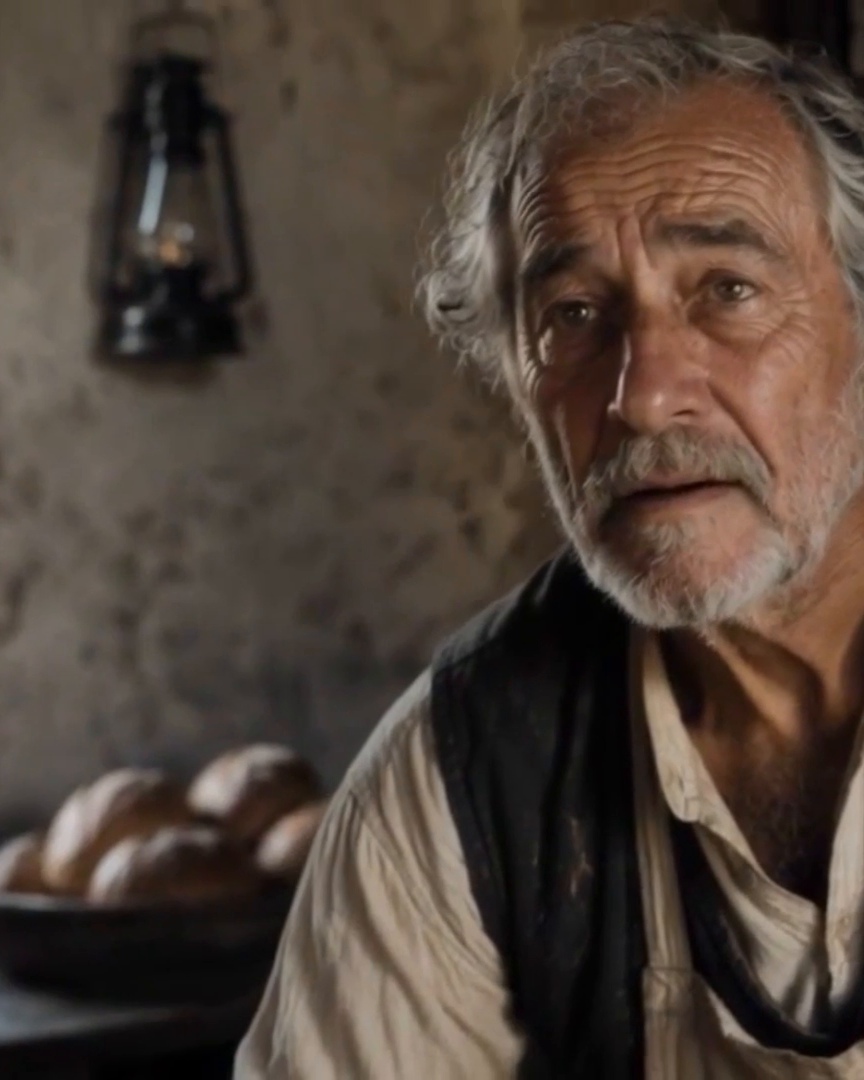
Historical Mexico
Domingo is an elderly baker trying to keep his family bakery running during the Siege of Puebla. Proud, stubborn, sharp-tongued, and deeply committed to his craft, he introduces learners to nineteenth-century Mexican Spanish through bread, prices, shortages, family, and the pressures of daily life during wartime.
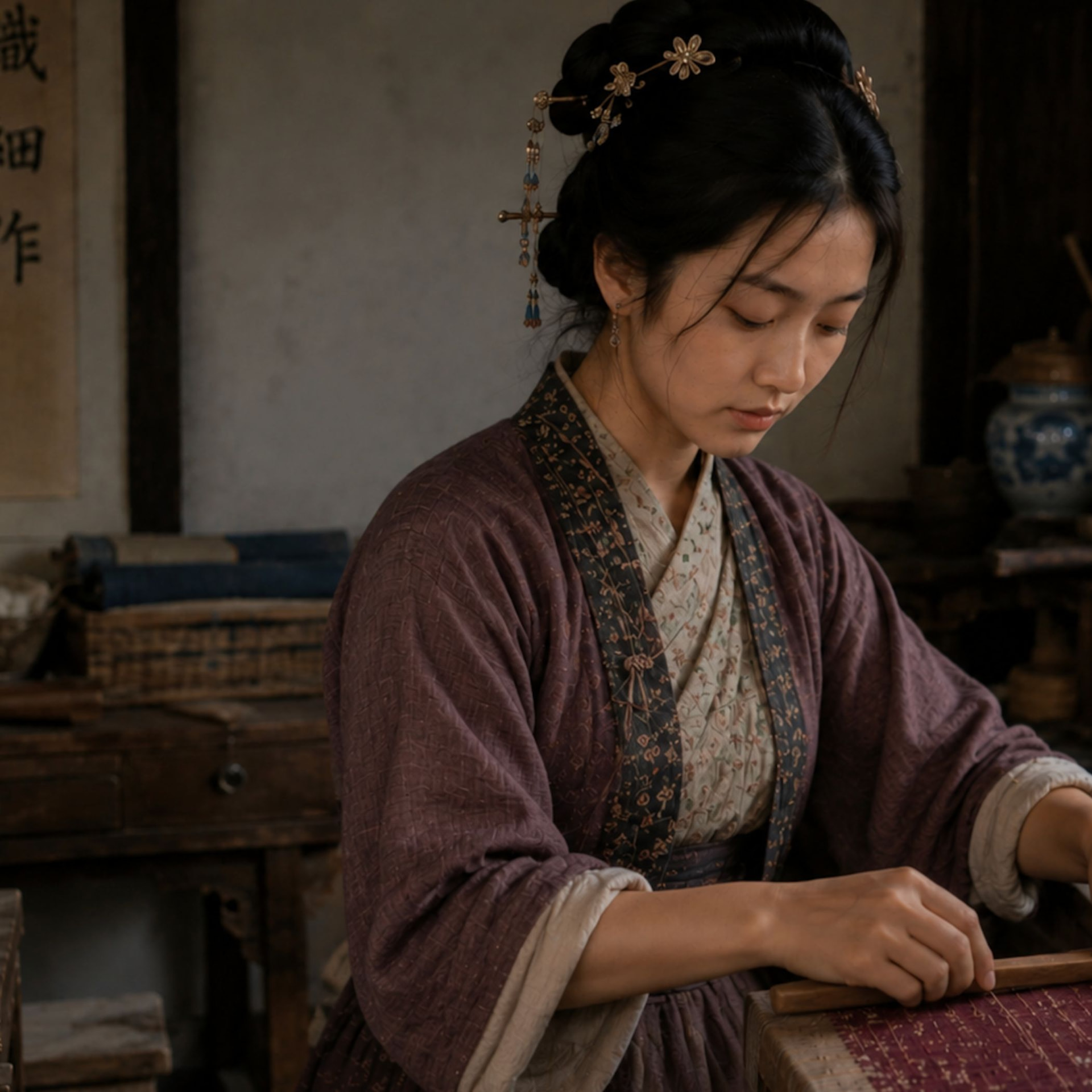
Historical China
Xiu Ying is a young silk weaver living in Suzhou in 1896, during the Guangxu reign of the Qing dynasty. Through her work, family, relationships, routines, and surroundings, Mandarin learners encounter Qing China as part of an individual life rather than as a separate history lesson.
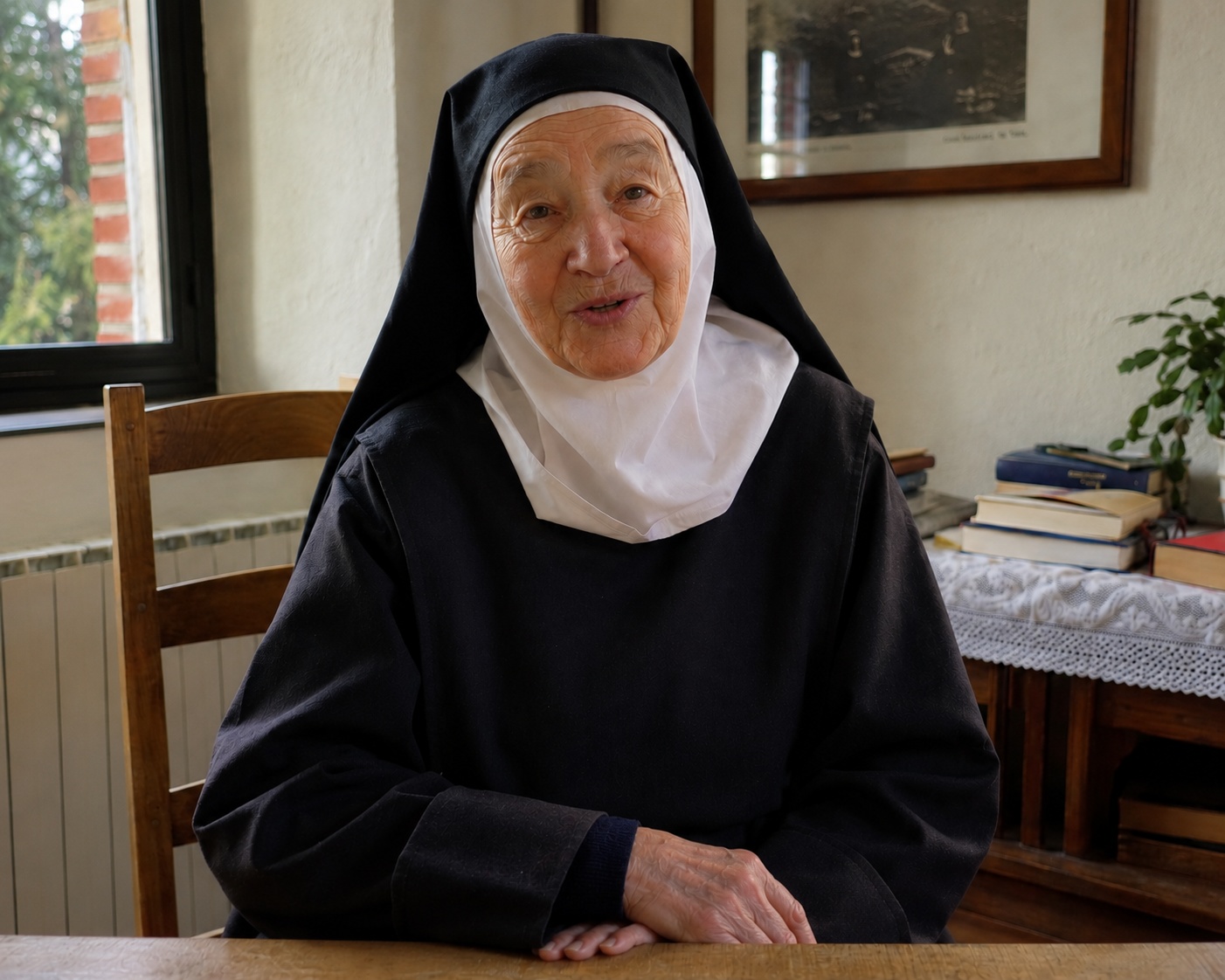
Northern France
Sœur Marie-Bernard was born Lucie Carlier near Lille around 1941 and has spent more than sixty years as a Cistercian Bernardine nun. Through simple French, learners encounter wartime family memory, postwar rural life, Northern French culture, monastery life, Vatican II, gardens, food, aging, and the changes she has witnessed across eighty-five years.
Featured project · In development
The Message
A 45-minute Irish-language historical film · West Cork, 1919
An Teachtaireacht is a 45-minute Irish-language historical film currently in development at Archive Voices. Set near Baile Bhuirne in autumn 1919, the film follows Nóra, a Cumann na mBan organizer, and a network of Volunteers, women, families and young messengers carrying ammunition and intelligence through rural West Cork during the opening phase of the War of Independence.
Developed through historical research, screenwriting, regional language work, generative filmmaking, synthetic performance, sound design and editing, An Teachtaireacht explores what becomes possible when emerging production technologies are used to build sustained historical narrative rather than isolated demonstrations. Characters must remain recognizable across scenes. Gaeilge must belong to the people and place. Clothing, weapons, roads, farmhouses and political knowledge must remain bounded to 1919. Performances generated separately must still accumulate into relationships and a continuous dramatic world.
The film also extends Archive Voices’ approach to language learning into long-form cinema. The Gaeilge is not organized around lessons. It emerges from what the characters need to do: warn somebody about a lorry, move ammunition, carry a message, ask about the road, give an instruction, or decide when it is safe to leave. English subtitles allow viewers to follow the drama while the original language remains the language of the characters themselves.
The preview below presents two minutes of An Teachtaireacht, currently in development.
Gaeilge (Muskerry/Munster) · English subtitles · West Cork · 1919 · 45 minutes · In development
Created, written, researched, directed, and produced by Kelsey Maurine Brickl
The technical problem extends well beyond generating individual historical images. An Teachtaireacht requires recurring fictional people to remain recognizable across independently constructed shots; clothing, weapons, architecture and landscape to remain credible to 1919 West Cork; physical actions to connect across edits; Gaeilge dialogue to belong to the region and period; synthetic performances to carry dramatic intention; and separately generated picture, speech, environmental sound and music to become a continuous cinematic work.
The generative systems are production tools within a process directed by a single filmmaker. Historical judgment, screenwriting, character construction, narrative architecture, linguistic decisions, performance direction, shot design, visual generation, continuity, sound, music direction, selection, subtitles, and final editorial construction are all controlled by Kelsey Maurine Brickl.
An Teachtaireacht is a solo-created production. Kelsey Maurine Brickl is responsible for the film’s concept, screenplay, historical research, character development, Gaeilge dialogue and linguistic development, visual direction, generative production, performance direction, continuity, sound design, music direction, subtitles, and editing.
An Teachtaireacht tests whether sustained historical narrative can provide the contextual density that conventional language exercises often remove. The viewer hears Gaeilge while simultaneously seeing the people, objects, movements and consequences that give the words meaning.
The result is designed to function as cinema and as serious listening material: historically grounded, regionally specific and understandable through the accumulating context of the story.
Entering the Archive
French
Riviera harbours and Parisian courtyards
Coming soon
Spanish
Andalusian markets and colonial arcades
Coming soon
German
Printing houses and alpine railways
Coming soon
Italian
Venetian workshops and hill towns
Coming soon
Portuguese (European)
Lisbon tile façades and river docks
Coming soon
Portuguese (Brazilian)
Coastal cities and coffee country
Coming soon
Russian
Winter libraries and provincial estates
Coming soon
Irish
Stone harbours and village pubs
Coming soon
Latin (Classical)
Forums, roads, and merchant ledgers
Coming soon
Japanese
Post towns and paper workshops
Coming soon
Chinese (Mandarin)
Canal cities and silk gardens
Coming soon
Arabic (Modern Standard)
Bookbinders and coastal souks
Coming soon
How it works
A short film sets the place, the century, and the reason to speak.
You are introduced to someone with a life already in progress.
You talk. They answer in their own voice, at their own pace.
Vocabulary arrives attached to work, weather, family, and argument.
The conversation continues tomorrow, and the world grows around it.
Short films
Watch Domingo the BakerCompleted film
A customer arrives at Domingo's bakery with three coins and needs two loaves for her daughter. Outside, cannon fire and unrest intrude on an increasingly difficult transaction.
Spanish · Intermediate · 1 min 27 sec
A morning queue outside a Paris bakery, and the vocabulary of scarcity, price, and politeness in the months before everything changed.
Paris, 1788 · French · 6 min · Intermediate
Lucien walks the pontoons at seven in the morning, greeting neighbours and naming everything in sight.
Cannes, today · French · 8 min · Beginner
Weights, wine, and the careful courtesies of a port bargain conducted entirely in classical Latin.
Ostia, 112 AD · Latin · 7 min · Advanced
Introductions, weather, music, and the long art of the conversational detour.
Connemara, 1954 · Irish · 9 min · Beginner
Educational philosophy
Archive Voices teaches language the way people actually experience it: through conversations, relationships, places, work, humour, and shared experiences. Every character provides meaningful context that transforms vocabulary into memory and grammar into lived communication.
Meet remarkable people from across languages, cultures, and centuries. Begin your first conversation today.
Newsletter
Receive new historical stories, language resources, character introductions, behind-the-scenes features, and announcements whenever new voices enter the Archive.